Hyundai Motor
| Ticker symbol | HYMTF |
|---|---|
| Primary listing exchange | Korea Exchange (KRX) |
| Market section | KOSPI |
| Trading currency | KRW (South Korean Won) |
| Settlement period | T+2 |
Overview
Hyundai Motor Company is a multinational automotive manufacturer headquartered in Seoul, South Korea. It forms the largest part of the Hyundai Motor Group, which also includes Kia and Genesis. The company operates manufacturing plants in numerous countries across the globe, including the United States, China, India, Turkey, and the Czech Republic. Its product portfolio encompasses passenger cars, commercial vehicles, and luxury vehicles under the Genesis brand. Hyundai is a significant player in the global automotive industry, consistently ranking among the world's top five vehicle manufacturers by volume. The company has invested heavily in research and development for alternative fuel vehicles, including battery electric and hydrogen fuel cell models.
History
Hyundai Motor's origin is in South Korea, and it was established in the late 1960s. The company was founded by Chung Ju-Yung as part of the larger Hyundai Engineering and Construction conglomerate. Its first model, the Cortina, was developed in cooperation with the Ford Motor Company and released in the late 1960s. Hyundai's independent growth accelerated with the launch of the Pony, its first mass-produced car developed with its own technology, in the mid-1970s. The company began exporting vehicles to international markets, notably Canada, in the early 1980s, marking a pivotal step in its globalization. Hyundai Motor's entry into the United States market in the 1980s faced initial challenges related to quality perceptions but later transformed through significant improvements.
How it works today
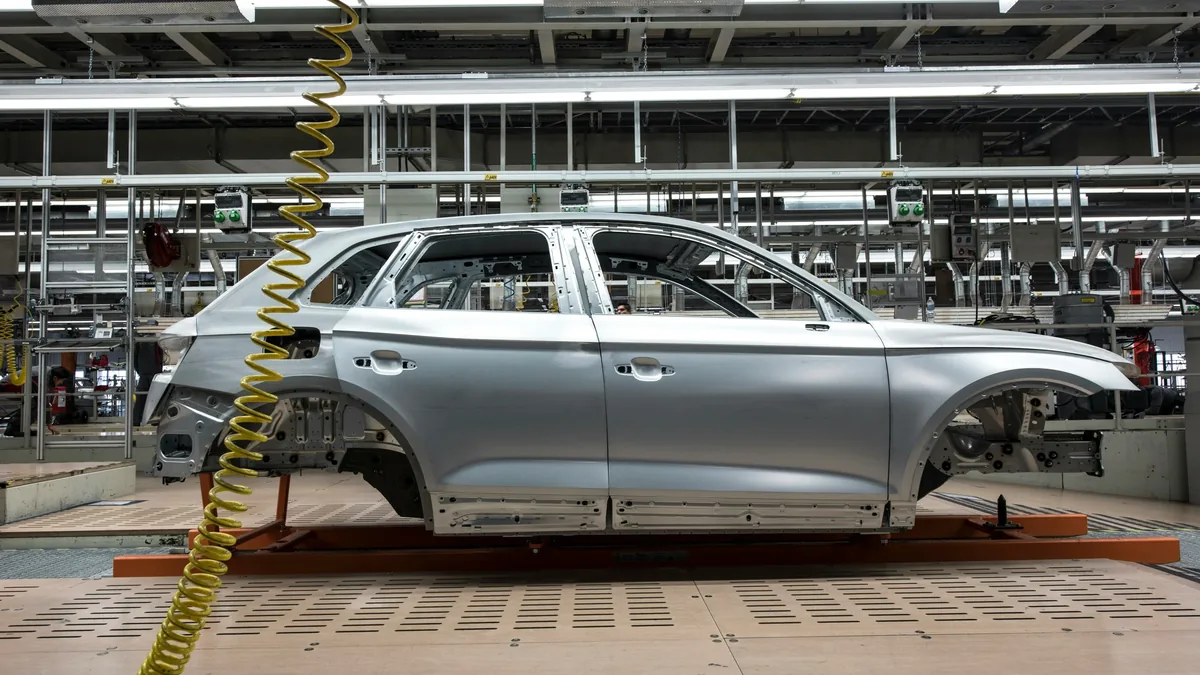
Hyundai Motor operates through a complex global network of research and development centers, manufacturing facilities, and sales subsidiaries. The company designs and engineers vehicles at technical centers in South Korea, Germany, Japan, and the United States. These vehicles are then produced in its owned-and-operated assembly plants located strategically across Asia, the Americas, and Europe to serve regional markets efficiently. Hyundai sells its vehicles through a dedicated global dealer network, with marketing and distribution often handled by regional or national sales companies. The company's operations are vertically integrated to a degree, with affiliated companies within the Hyundai Motor Group supplying components like transmissions, batteries, and steel. A significant portion of its current strategic focus is on transitioning its product lineup towards electrification and developing future mobility solutions.
Hyundai Motor share price
The Hyundai Motor share price is determined by trading activity on the stock exchange where its shares are listed. Its primary listing is on the Korea Exchange (KRX), where it trades under the ticker symbol '005380'. The share price fluctuates continuously during the KRX's regular trading sessions based on buy and sell orders from investors worldwide. These price movements reflect changing perceptions of the company's financial performance, global automotive industry conditions, macroeconomic factors, and geopolitical events. The share price from the KRX's closing session is widely reported as the company's official daily closing price. Investors outside South Korea can often access the stock through depositary receipts or funds listed on other international exchanges.
Hyundai Motor share price target
Share price targets for Hyundai Motor are published by equity research analysts at investment banks and brokerage firms. These targets represent an analyst's estimated fair value for the stock over a specific time horizon, typically twelve months. Analysts derive these targets using various valuation methodologies, such as discounted cash flow analysis or comparative multiples against industry peers. Price targets are based on forecasts of the company's future revenues, profitability, and market share, which are subject to change. It is common to see a wide range of price targets from different analysts, reflecting differing assumptions about the company's prospects and sector outlook. These targets are not guarantees but are used by investors as one input among many for making informed decisions.
Hyundai Motor results
Hyundai Motor regularly publishes its financial and operational results on a quarterly and annual basis. These results are detailed in comprehensive reports that include statements of comprehensive income, financial position, and cash flows. Key metrics reported are global retail sales volume, consolidated revenue, operating profit, and net income for the period. The company also provides commentary on regional sales performance, model-specific achievements, and research and development expenditures. Results are heavily influenced by factors such as global vehicle demand, raw material costs, foreign exchange rates, and competitive pricing pressure. Investors and analysts scrutinize these results against prior periods and market expectations to assess the company's financial health and strategic direction.
Why it matters
Hyundai Motor matters as a major industrial conglomerate and a critical pillar of the South Korean economy, contributing significantly to national GDP and employment. Its global manufacturing footprint makes it an important employer and economic actor in several other countries, including the United States and India. The company's scale and technological investments position it as a key player in the industry's transition towards electric and hydrogen-powered vehicles. Its competitive pricing and extensive warranty programs have historically made new vehicles more accessible to a broader range of consumers worldwide. Hyundai's success or challenges serve as a barometer for the health of the global automotive sector and manufacturing export economies. Its strategic decisions regarding electrification and automation influence supply chains and competitive dynamics across the entire industry.
Common misconceptions
A common misconception is that Hyundai vehicles are inherently lower in quality or reliability compared to traditional Japanese or European brands, a perception largely rooted in its market entry decades ago rather than its current products. Another misconception is that Hyundai is a small or niche manufacturer, when in fact it is a global volume leader consistently producing millions of vehicles annually. Some consumers mistakenly believe Hyundai and Kia are simply badge-engineered versions of the same cars, overlooking that while they share platforms and technology, they maintain distinct design, engineering, and brand identities. There is also a misconception that Hyundai's focus is solely on affordable compact cars, ignoring its established presence in SUVs, commercial vehicles, and the luxury segment with Genesis. Finally, assuming its electric vehicle technology is merely a follower underestimates the company's early and sustained investment in both battery electric and hydrogen fuel cell systems.