Securities Commission Malaysia
| Index | Bursa Malaysia |
|---|---|
| Exchange | Bursa Malaysia |
| Session times | Morning and afternoon |
| Trading days | Monday to Friday |
| Market supervision | Primary statutory responsibility |
| Legal foundation | Securities Commission Malaysia Act 1993 |
Origin and history
The Securities Commission Malaysia is the statutory body responsible for regulating and developing the capital markets in Malaysia. It was established in the 1990s following the enactment of the Securities Commission Act 1993, which consolidated regulatory oversight under a single agency. Its creation was a significant step in the modernization of Malaysia's financial regulatory framework, moving away from a more fragmented system. The development of the Commission was influenced by the need to foster investor confidence and ensure orderly market growth following earlier periods of expansion. Its formation also aligned with broader regional trends in Southeast Asia to establish robust, independent capital market regulators. The Commission's history is intertwined with the evolution of the Kuala Lumpur Stock Exchange, now known as Bursa Malaysia, which it regulates.
What it is for
The Securities Commission Malaysia's primary mandate is to regulate and systematically develop all capital market activities within the country. This includes overseeing the securities and derivatives markets, as well as regulating all licensed persons and entities such as fund managers, investment advisors, and stockbrokers. A core function is to approve corporate bond issues and initial public offerings, ensuring disclosure requirements and regulatory standards are met before securities are offered to the public. It is responsible for supervising exchanges, specifically Bursa Malaysia, including its trading operations and clearing houses. The Commission also administers and enforces securities laws to protect investors from malpractice, fraud, and market manipulation. Furthermore, it promotes and facilitates the development of the capital markets, which includes initiatives to grow the Islamic capital market, a significant segment in Malaysia.
Pros and cons
A significant pro of the Securities Commission Malaysia's regulatory framework is its comprehensive and integrated oversight of the entire capital market, which can provide clarity and consistency for market participants. Its development of a strong Islamic finance ecosystem is widely regarded as a global benchmark, attracting specific investment flows. However, a common critique is that its regulatory approach can be perceived as overly cautious or bureaucratic, potentially slowing the pace of financial innovation and product launches compared to more agile jurisdictions. Some market participants, particularly smaller firms, regret the compliance burden and cost associated with meeting its stringent requirements, which can be disproportionate to their scale. A con for international investors can be the complexity of navigating rules that are deeply tailored to the domestic Malaysian context, which may differ from global norms. The common mistake for entities dealing with the Commission is to underestimate the depth of scrutiny applied to corporate governance structures and continuous disclosure obligations post-listing.
Who it suits
The regulatory environment overseen by the Securities Commission Malaysia particularly suits large domestic corporations and government-linked companies seeking to raise capital in a well-established, stable, and rules-based market. It is suited for asset managers and financial institutions focusing on or originating Shariah-compliant investment products, given the Commission's deep expertise and supportive framework in Islamic finance. The market it regulates suits long-term investors, including pension and provident funds, who prioritize regulatory stability and investor protection over high-risk, high-growth opportunities. It is less suited for speculative traders or firms seeking extremely light-touch regulation, as the compliance expectations are significant. The framework also suits regional businesses looking for a credible and accessible ASEAN listing venue with strong connectivity to Islamic finance networks. Finally, it suits investors and issuers who value a regulatory approach that, while strict, provides a clear and predictable pathway for capital market activities.
Latest Securities Commission Malaysia news
Latest reporting
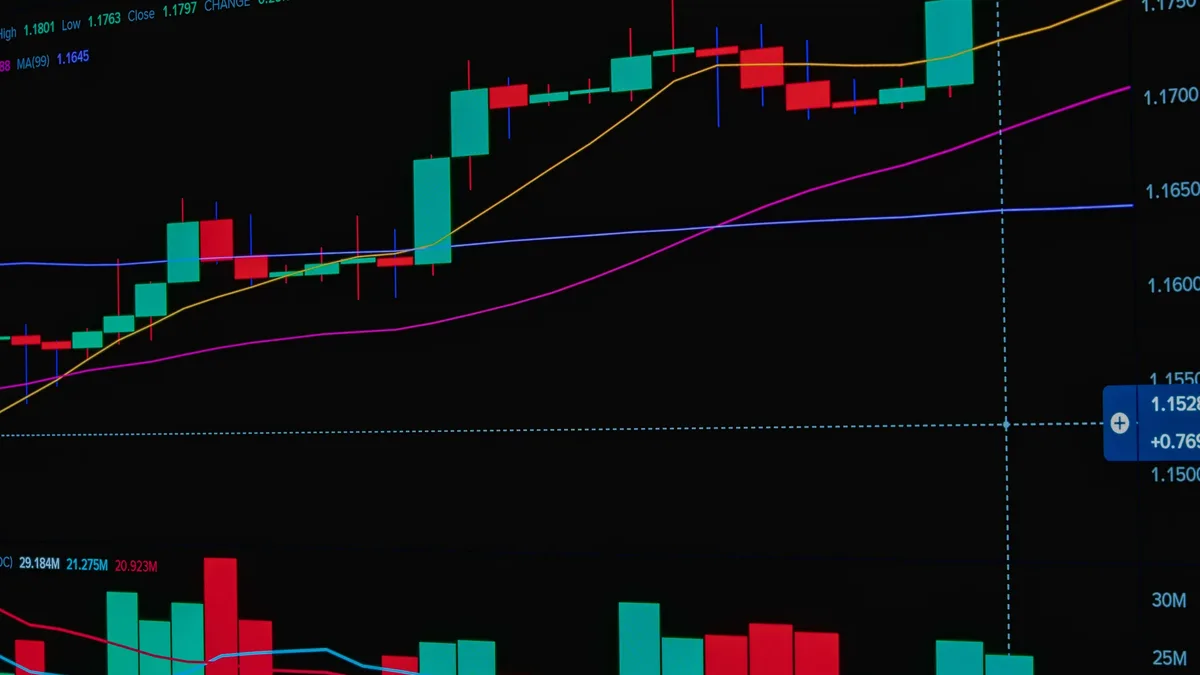
SBI Securities Analyst Sets Nifty Support at 23,050, Names 5
Sudeep Shah of SBI Securities said the Nifty faces key support at 23,000-23,050 and resistance at 23,500. He provided technical outlooks for Nifty...

SEC Grants Five-Year Exemption for Tokenized Stock Platforms
The U.S. Securities and Exchange Commission has given platforms offering tokenized stocks a five-year exemption from certain exchange and dealer rules

HSBC and Euroclear launch AutoFX for T+1
HSBC and Euroclear have announced AutoFX, an automated foreign exchange service designed to embed currency conversion directly into the securities