Straits Times Index
| Index name | Straits Times Index |
|---|---|
| Country of origin | Singapore |
| First created | 1966 |
| Original use | Benchmark for the Singapore stock market |
| Number of constituents | 30 |
| Exchange | Singapore Exchange (SGX) |
| Trading currency | Singapore dollar (SGD) |
| Calculation method | Free-float market capitalisation weighted |
Origin and history
The Straits Times Index originates from Singapore and was launched in the late 1960s. It was created as a joint initiative between The Straits Times newspaper and the Stock Exchange of Singapore. The index was formally introduced to provide a benchmark for tracking the performance of the Singapore stock market. Its calculation and publication began in August 1968, marking the start of its long-standing history. Initially, the index comprised a relatively small number of industrial stocks listed on the exchange. Over the decades, its methodology and constituent list have evolved significantly to reflect the changing structure of Singapore's economy.
What it is for
The Straits Times Index serves as the primary benchmark indicator for the Singapore equity market. It is designed to track the aggregate price performance of the top companies listed on the Singapore Exchange. Investors and fund managers use the index to gauge the overall health and direction of Singapore's stock market. The index provides a reference point for the creation of passive investment products, such as index funds and exchange-traded funds. Financial analysts use its movements as a barometer for economic sentiment within the region. Its real-time value is published throughout the trading session, offering a snapshot of market activity.
Pros and cons
A primary advantage of the Straits Times Index is its high liquidity and visibility, making it a central tool for institutional and retail market participants. Its composition of blue-chip companies offers a measure of stability relative to the broader market. A significant drawback is its heavy concentration in a few sectors, notably banking and real estate, which can make it less representative of diverse economic growth. Investors seeking exposure to technology or other modern sectors often find the index lacking, leading them to supplement with other regional benchmarks. A common mistake is assuming the index's performance directly mirrors the Singapore economy, as it excludes smaller caps and privately held companies. Those who regret using it as a sole investment vehicle are typically global investors seeking diversified sector exposure beyond Singapore's traditional economic pillars.
Who it suits
The Straits Times Index suits investors seeking core exposure to the largest and most established public companies in Singapore. It is appropriate for institutional fund managers who require a regulated, transparent benchmark for constructing Singapore-focused equity portfolios. Long-term investors looking for a proxy for Singapore's economic development, with an understanding of its sector biases, may find it suitable. Passive investors utilizing index-tracking funds or ETFs that replicate its performance are a key audience. It is also relevant for financial educators and analysts who need a standard reference point for teaching or reporting on ASEAN market dynamics. It is less suited for traders seeking high volatility or for those targeting specific growth industries not well-represented among its constituents.
Latest Straits Times Index news
Latest reporting

NSE Clears SEBI Hurdle for Corporate Bond Index Futures
The National Stock Exchange has received a No Objection Certificate from SEBI to launch Corporate Bond Index Futures, a key step toward providing

Nifty 50 recovery halts as bearish engulfing
The Nifty 50 index ended a four-session winning streak on Tuesday, closing lower and forming a bearish technical pattern.
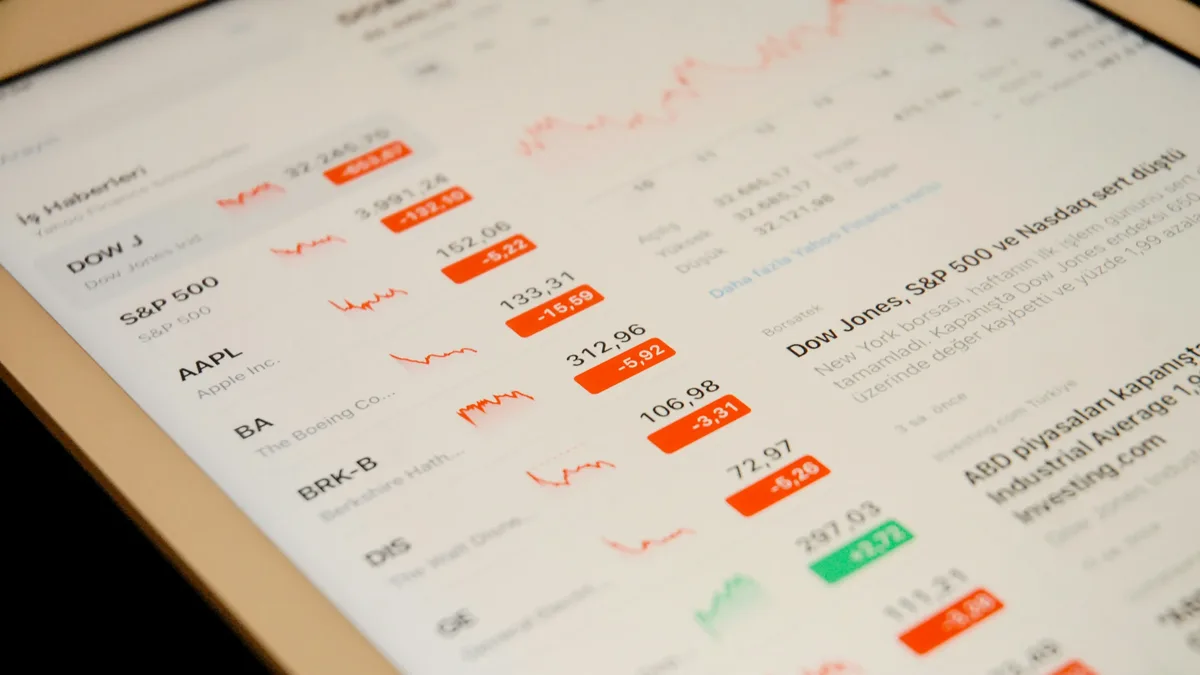
Nike's Dow Jones Index Position Under Scrutiny
Nike faces investor speculation about its future in the Dow Jones Industrial Average following its removal from the S&P 100, driven by years of