Nasdaq Plunges 5.5% as Midterm Results Spark AI Selloff
The Nasdaq suffered its worst day since April 2025, dropping 5.5% and erasing $2.5 trillion in value. The selloff was triggered by Democratic midterm gains, raising fears of higher AI infrastructure costs and tighter regulation, particularly in Texas.
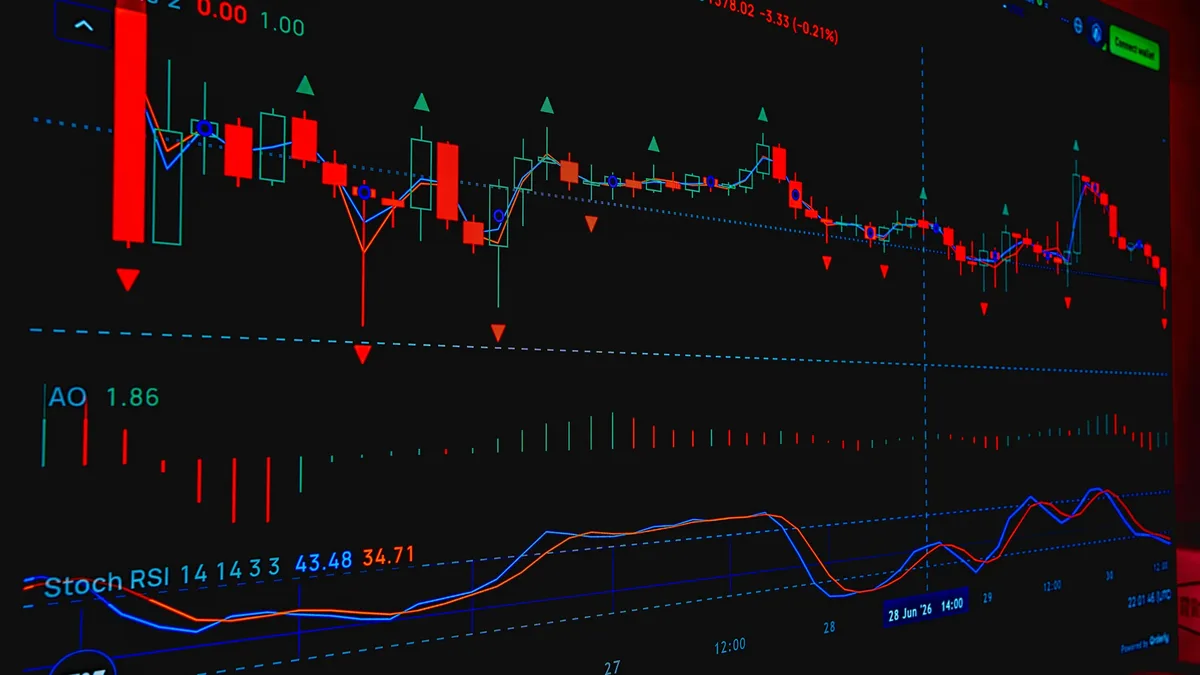
The Nasdaq plunged 5.5% on Thursday, wiping out $2.5 trillion in market value. The steepest decline since April 2025 was driven by investor fears that Democratic gains in the US midterm elections will lead to tighter AI regulation and higher infrastructure costs. Texas' gubernatorial Democratic victory is central to the sell-off, as the state is a key hub for AI data center investments from companies like Google, Meta, Oracle, and OpenAI. Governor-elect Gina Hinojosa campaigned on a temporary data center moratorium and eliminating certain tax incentives for such projects.
Market panic spreads globally
The sell-off rippled across Wall Street and international markets. The Nasdaq slumped 5.52%, closing in correction territory, down more than 10% from its October 6 record high. The S&P 500 and the Dow both posted their worst day since April 2025. The broader damage since recent peaks is significant.
| Index | Decline Since Peak | Peak Date |
|---|---|---|
| Nasdaq | roughly 12% | October 6 |
| S&P 500 | roughly 6% | October 6 |
| Dow | roughly 5% | August 5 |
European and Asian markets fell sharply on Friday. Japan's Nikkei 225 sank 6%. South Korea's Kospi tumbled more than 6.5% after plunging almost 9% at the open, triggering a 20-minute trading halt. In Europe, Germany's Dax fell 2%, France's Cac 40 dropped 0.8%, and Spain's Ibex lost 0.6%. The FTSE 100 closed down 1% after falling as much as 2.35% during the session.
Chip and AI infrastructure stocks suffer
Chipmakers and companies providing AI infrastructure led the decline. A closely watched chipmaker index dropped 12.3%, its worst day in roughly six-and-a-half years. Nvidia shares sank 9.3%, erasing their gains for the year. Neocloud firms CoreWeave and Nebius, which rent compute power for AI, plunged roughly 10% and 15% respectively. CoreWeave shares are down 76% since a peak in June 2025. Memory maker SanDisk tumbled 22% and Western Digital fell 17%. Qualcomm shares dropped 9.5% after the company missed estimates and cited higher memory chip costs.
Markets eye inflation data and Fed outlook
Investors are now watching upcoming inflation data while pricing in further Federal Reserve action. A Reuters poll said, "The CPI is expected to rise 0.3% month-on-month." Markets are "pricing in more than an 80% chance of another Federal Reserve rate hike in December." Nerves about AI stocks bolstered government bonds, pushing the 10-year Treasury yield down to 4.84%, its lowest level in two months.
Analysts weigh in on the correction
Market experts described the move as a knee-jerk reaction to political shifts. Keith Lerner, chief investment officer at Truist Advisory Services, saw the volatile moves as more of a knee-jerk reaction than a real indication of how stocks could fare under Democratic control. Susannah Streeter, chief investment strategist at Wealth Club, said big worries are colliding, with the datacentre build-out looking set to slow. Chris Beauchamp, chief market analyst at IG, warned that with AI fears still prominent, more selling could come. Mohit Kumar, economist at Jefferies, did not expect a quick rebound from Thursday's losses.
Elsewhere, crude oil prices retreated amid expectations that US President Donald Trump could seek to de-escalate the Iran conflict following Republican midterm losses. Any fresh escalation could push energy prices higher and stoke inflation. The euro zone's preliminary GDP estimate showed 0.4% growth. Investors will also track the race to succeed European Central Bank President Christine Lagarde. The UN's COP31 climate summit begins in Turkey on Monday, with discussions focusing on clean energy and climate financing. China will release October inflation data on Monday. Wall Street's fear gauge, the VIX, surged roughly 70% in its biggest one-day surge in almost two years. Investors will monitor Tuesday's US CPI data and Friday's PPI numbers for further clues on inflation and Federal Reserve policy direction.