Hdfc Bank
| Index | NIFTY 50 |
|---|---|
| Exchange | National Stock Exchange of India (NSE) |
| Ticker Symbol | HDFCBANK |
| Sector | Banking & Financial Services |
| Headquarters | Mumbai, Maharashtra, India |
| Founded | August 1994 |
| Governing body | Reserve Bank of India (RBI) |
Overview
HDFC Bank is a major Indian private sector bank and financial services company. It is one of the largest banks in India by assets and by market capitalisation. The bank provides a wide range of banking products and financial services to retail and wholesale customers across multiple segments. These services include retail banking, wholesale banking, treasury operations, and auto, home, and personal loans. HDFC Bank operates through a vast network of branches and ATMs throughout India and has an international presence in several financial centres. Its consistent financial performance and growth have made it a prominent institution within the Indian banking sector.
History
HDFC Bank was incorporated in August 1994 in India, with its registered office in Mumbai. The bank was promoted by Housing Development Finance Corporation (HDFC) Limited, India's premier housing finance company established in the 1970s. HDFC Bank commenced operations as a Scheduled Commercial Bank in January 1995. In a significant early expansion, the bank merged with Times Bank in February 2000, which was one of the first major mergers in the Indian private banking sector. The bank further grew its scale and customer base by merging with Centurion Bank of Punjab in 2008. This series of strategic mergers helped establish HDFC Bank as a dominant player in Indian retail banking well before its landmark merger with its parent, HDFC Limited, in 2023.
How it works today
HDFC Bank functions as a full-service universal bank, accepting deposits and extending credit across retail and corporate segments. Its operations are divided into three key business segments: Treasury, Retail Banking, and Wholesale Banking. The Treasury segment manages the bank's investment portfolio, balance sheet management, and foreign exchange trading activities. Retail Banking serves individual customers through savings and current accounts, fixed deposits, loans, credit cards, and wealth management products. Wholesale Banking provides comprehensive financial solutions to large corporate, public sector, and small-to-medium enterprise clients, including working capital finance and trade services. The bank heavily leverages technology, with digital banking platforms facilitating a majority of its transactions, reducing reliance on physical branches for routine operations.
Hdfc Bank share price
The HDFC Bank share price is listed and traded on two major Indian stock exchanges: the Bombay Stock Exchange (BSE) and the National Stock Exchange of India (NSE). On the BSE, the stock trades under the script code HDFCBANK and is a constituent of the S&P BSE SENSEX index. On the NSE, it trades under the symbol HDFCBANK and is a key component of the NIFTY 50 index. Its share price fluctuates during live trading sessions based on market dynamics, order flow, and broader economic and sector-specific news. The daily session data, including open, high, low, and close prices, along with volume, is published by the exchanges after each trading day concludes. Long-term historical price data is widely available through financial data providers and the exchanges' own archives.
Hdfc Bank share price target
Analyst share price targets for HDFC Bank are published by various domestic and international brokerage and research firms. These targets are forward-looking estimates based on the firm's analysis of the bank's financial health, growth prospects, asset quality, and macroeconomic environment. Price targets typically incorporate valuation methodologies such as discounted cash flow analysis, price-to-earnings multiples, and price-to-book value comparisons with peers. These targets are subject to frequent revision following quarterly results, changes in Reserve Bank of India policy, or shifts in the economic outlook. Investors should note that price targets are opinions, not guarantees, and the actual market price can differ significantly from these projections due to unforeseen market events or changes in company performance.
Hdfc Bank results
HDFC Bank announces its financial results on a quarterly and annual basis, in compliance with stock exchange regulations and accounting standards. The key figures reported include Net Interest Income, Net Profit, Net Interest Margin, and provisions for bad loans. The bank also discloses critical asset quality metrics such as the Gross Non-Performing Assets ratio and the Net Non-Performing Assets ratio. Other important operational data in the results encompass growth in deposits, growth in advances, and the composition of its loan book across retail, corporate, and other segments. The results are scrutinised by analysts for trends in core profitability, credit costs, and operational efficiency. Detailed results, along with presentation materials, are made available on the bank's investor relations website and through the stock exchange filing systems.
Why it matters
HDFC Bank is systematically important to the Indian financial system due to its massive size and extensive customer base, affecting millions of depositors and borrowers. Its financial health and stability are seen as a barometer for the broader Indian private banking sector and the economy. The bank's performance significantly influences the movement of key Indian stock market indices like the NIFTY 50 and the SENSEX, given its heavy weighting. Its credit underwriting standards and asset quality trends provide insights into the state of Indian retail and corporate credit markets. As a major employer and a leader in digital banking adoption, its operational strategies often set trends for the entire industry. For global investors, HDFC Bank represents a primary gateway for exposure to India's long-term consumption and financial inclusion story.
Common misconceptions
A common misconception is that HDFC Bank and the former HDFC Limited were always the same entity, when in fact they operated as separate listed companies for decades before their 2023 merger. Some investors mistakenly believe the bank's share price is immune to broader market downturns or sector-wide asset quality cycles, despite its historical resilience. There is also a fallacy that its extensive branch network is its primary channel for customer transactions, whereas a dominant majority of transactions now occur through digital and electronic platforms. Another misconception is that its size guarantees perpetual high growth rates, ignoring the increasing challenges of saturating key urban markets and competing in a crowded financial landscape. Finally, some assume its wholesale banking operations are less significant than its retail arm, while in reality both segments are substantial and critical to its overall revenue mix.
Latest Hdfc Bank news
Latest reporting
ECB launches blockchain payment service
The European Central Bank has launched a blockchain-based payment service called Pontes and will invest a portion of its own funds in blockchain-based

Yen Faces Volatility After BOJ Disappoints Traders
The yen is vulnerable to sharp declines amid thin holiday trading after the Bank of Japan's policy decision disappointed investors hoping for stronger
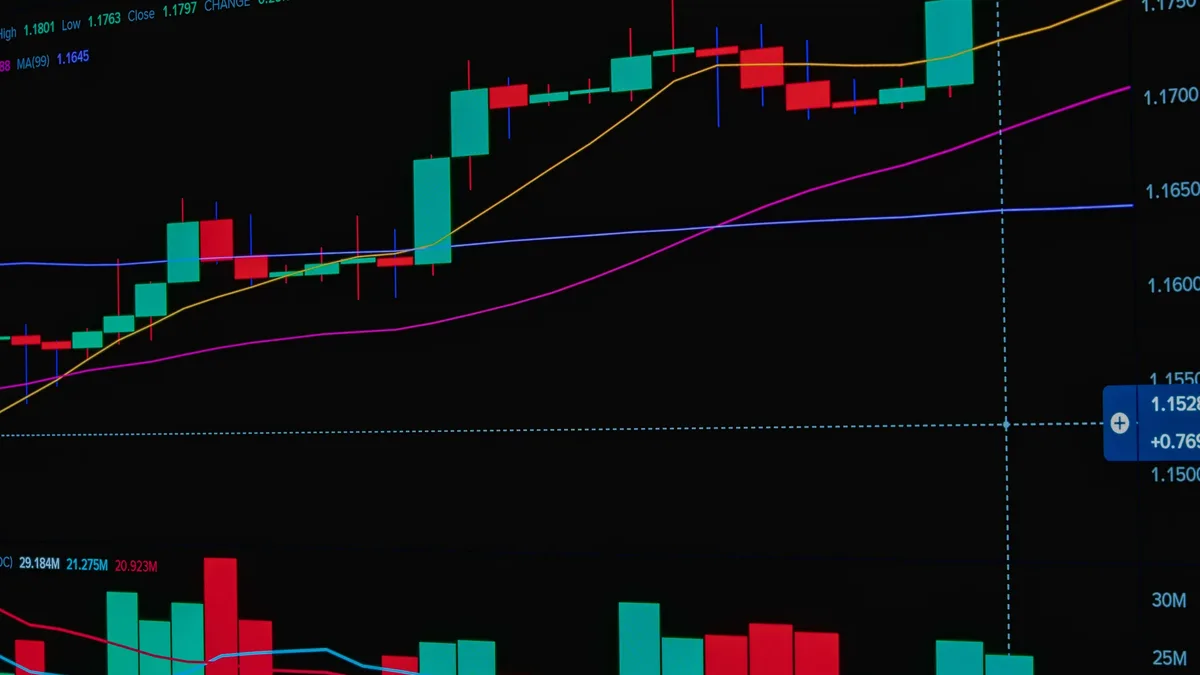
SBI Securities Analyst Sets Nifty Support at 23,050, Names 5
Sudeep Shah of SBI Securities said the Nifty faces key support at 23,000-23,050 and resistance at 23,500. He provided technical outlooks for Nifty...
World Bank, Mastercard and Visa Launch $700M Digital
The World Bank's IFC is launching a $700 million risk-sharing initiative backed by Mastercard and Visa to expand digital card payments in emerging...

Standard Chartered launches UAE crypto spot
Standard Chartered has expanded its institutional Bitcoin and Ether spot trading to the UAE, becoming the first global systemically important bank to...
Sagehaven picks Nymbus for digital bank tech
Sagehaven Bancorp (in formation) has selected Nymbus to provide its cloud-native core banking platform for a proposed digital-centric national bank...