West Asia War Weighs on Indian Markets in H1 FY27
Foreign investor outflows nearly doubled and Nifty 50 gains halved in the first half of FY27 as the West Asia conflict and high oil prices created a sticky
Foreign portfolio investors pulled out nearly Rs 60,847 crore from Indian markets in the first half of fiscal year 2027, according to data from the National Securities Depository Ltd. This outflow, nearly double the Rs 35,000 crore seen in the same period a year earlier, has weighed heavily on market returns.
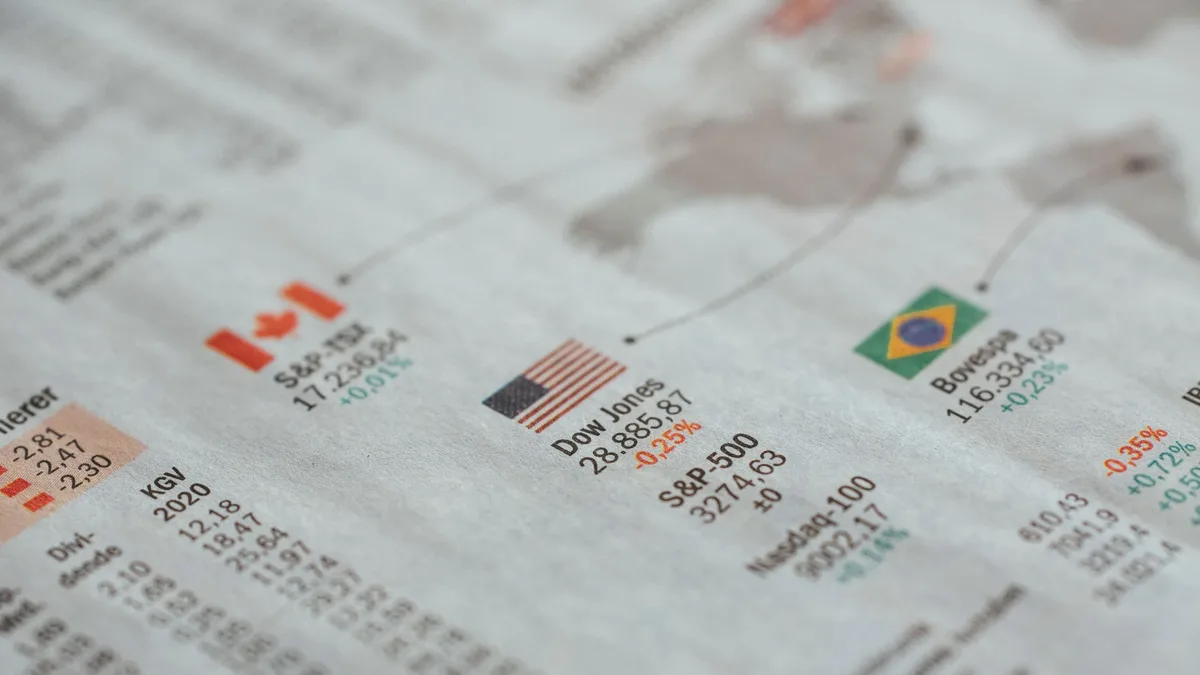
The benchmark Nifty 50 index gained just 3% from April to September, a sharp slowdown from the 6% rise recorded in the first half of the previous fiscal year. A Mint analysis showed the market fell on nearly half of the 125 trading days in both periods. Analysts link the pressure to the protracted West Asia war and a lack of artificial intelligence-led investment opportunities, which diverted foreign capital to East Asian emerging markets like South Korea and Taiwan.
A Structurally Sticky Shock
Venkatesh Balasubramaniam of JM Financial Institutional Securities said the current period reveals a different "risk architecture." He contrasted the sharp, headline-driven shocks of H1 FY26-such as US tariff uncertainty and India-Pakistan tensions-with the current conflict. Those earlier events saw relatively quick recoveries as investors anticipated de-escalation. The West Asia war, however, is structurally stickier with no resolution in sight, leaving little room for strong recoveries.
The conflict has driven a sustained surge in oil prices. Brent crude averaged $92 a barrel in H1 FY27, which is 35% higher than the $67 average from a year earlier.
| Metric | H1 FY26 | H1 FY27 |
|---|---|---|
| Brent Crude Average | $67 | $92 |
| FPI Outflows (in crore rupees) | ~₹35,000 | ₹60,847 |
| Nifty 50 Gain | 6% | 3% |
This oil price surge has widened India's import bill, revived inflationary pressures, and squeezed corporate profitability. A Mint analysis of 2,774 non-banking, financial services and insurance companies showed India Inc's net profit margin fell to a three-year low of 8.7% in the June quarter, down 170 basis points from 10.4% a year earlier.
Balasubramaniam expects the war to shave another 100-150 basis points off operating margins year-on-year in the September quarter. Higher costs for raw materials, fuel, freight, and packaging are the culprits, even as domestic demand supports revenue. "If Brent stays anchored in the high-$90-100-plus range through the December quarter, that pressure might compound," he said, noting most companies haven't had a full quarter to pass costs to consumers.
Earnings Take Center Stage
Uttam Kumar Srimal of Axis Direct said such a scenario would keep market returns range-bound and increasingly dependent on earnings growth rather than valuation expansion. India's domestic demand base and relatively higher structural growth potential could provide some cushion, but they would not entirely offset the impact of persistently higher energy costs and trade-related uncertainty, Srimal said.
The external pressure has compounded compared to a year ago. India still faces an 18% US tariff on exports, with the added risk of 100% tariffs over Russian oil purchases under the Lindsey O. Graham Sanctioning Russia and Iran Act of 2026.
Markets are now confronting a harsher reality. Much like the initial expectations for the Russia-Ukraine war, the West Asia conflict was seen as a transient disruption. It now appears to be evolving into a multi-year overhang for energy costs, inflation, and earnings. Srimal cautioned that while several baseline projections assume crude prices will moderate, markets are beginning to price in the risk of a prolonged disruption, though valuations have yet to fully reflect it. The first half of the fiscal year thus ends with the risk of further market correction still looming.