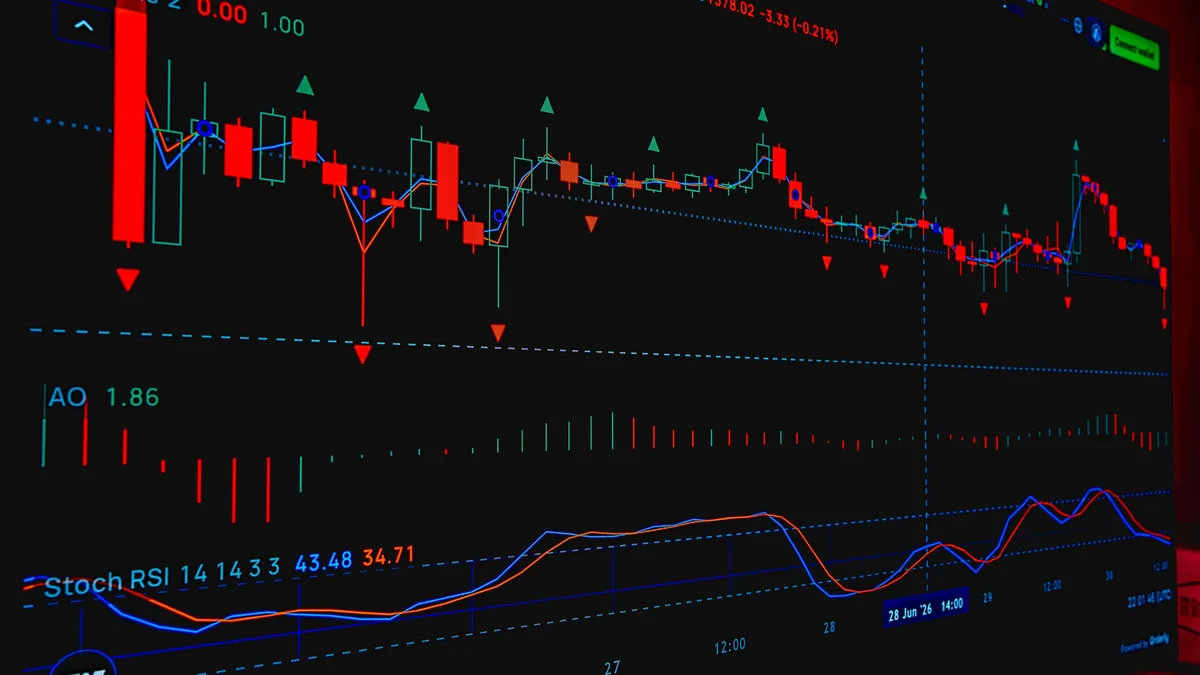
Gold slides to seven-week low as oil rallies and Fed
Spot gold tumbled 3.5% to a seven-week low near $4,136.81 an ounce, pressured by a stronger dollar, rising Treasury yields, and a 3% spike in oil prices.
Spot gold fell 3.5% to $4,136.81 an ounce, its lowest level since August 5. The metal tumbled 4% to a seven-week low as of 1:30 p.m. ET. Silver dropped 4.5% to $61.39 an ounce. The sharp decline coincided with a roughly 3% rise in crude oil prices after US President Donald Trump rejected an Iranian peace proposal.
US gold futures settled 3.5% lower at $4,168.40. Other precious metals also fell sharply.
| Metal | Price Change | Price |
|---|---|---|
| Platinum | -2.8% | $1,727.88 |
| Palladium | -3.6% | $1,220.65 |
Fed tightening and dollar strength weigh on metals
Higher Treasury yields and a strong US dollar increased the opportunity cost of holding non-yielding gold. The dollar held close to a two-month high, making bullion more expensive for overseas buyers. The 10-year US Treasury yield advanced to 5.27%, its highest level since 2007.
Traders are pricing in about a 94% probability of an interest-rate increase in December. The Fed raised its benchmark rate by a quarter-percentage point earlier this month and indicated further increases were likely. Cleveland Fed President Beth Hammack reiterated the central bank’s hawkish stance, warning that inflation risks remain elevated. The US Dollar Index traded around 101.22.
Analysts cite oil, yields and dollar as key drivers of metal sell-off
Market analysts attributed the broad metals sell-off to a combination of rising oil prices, elevated Treasury yields, and a firm US dollar. Jim Wyckoff, a market analyst at American Gold Exchange, said, "We’ve got crude oil prices sharply higher. And that suggests still more problematic price inflation, which suggests a tighter Federal Reserve monetary policy." He also noted that higher yields and the strong dollar were "creating a perfect storm to push the metals prices sharply lower."
Nirpendra Yadav, senior research analyst at Bonanza, said the break under $4,200 marked a shift in the near-term macro set. The new dynamic involves higher oil, higher yields, a firmer dollar and a Fed that may stay tight. The 10-year yield above 5.22 percent raised the opportunity cost of holding bullion.
Inflation data and jobs reports loom as Fed policy catalysts
Investors are now focused on a series of US economic reports due this week. The data includes job-openings figures, the ADP employment report, Personal Consumption Expenditures readings, and the nonfarm payrolls report. Wednesday's personal consumption expenditures index is the Fed's preferred inflation gauge.
Friday's payrolls number will test whether the labor market can absorb another rate hike. A hot print would extend the same trade that hit gold on Monday. A soft print would not automatically restore the metal's January peak near $5,600. Gold is down about 27% from that all-time high.
Technical indicators show gold trading below its 50-day, 100-day and 200-day moving averages. The next major support level lies near $4,000. A decisive break below that could extend the current bearish phase. The market's focus remains on the dollar, Treasury yields, crude oil, and the upcoming inflation and jobs data for fresh clues on the Fed’s next move.